
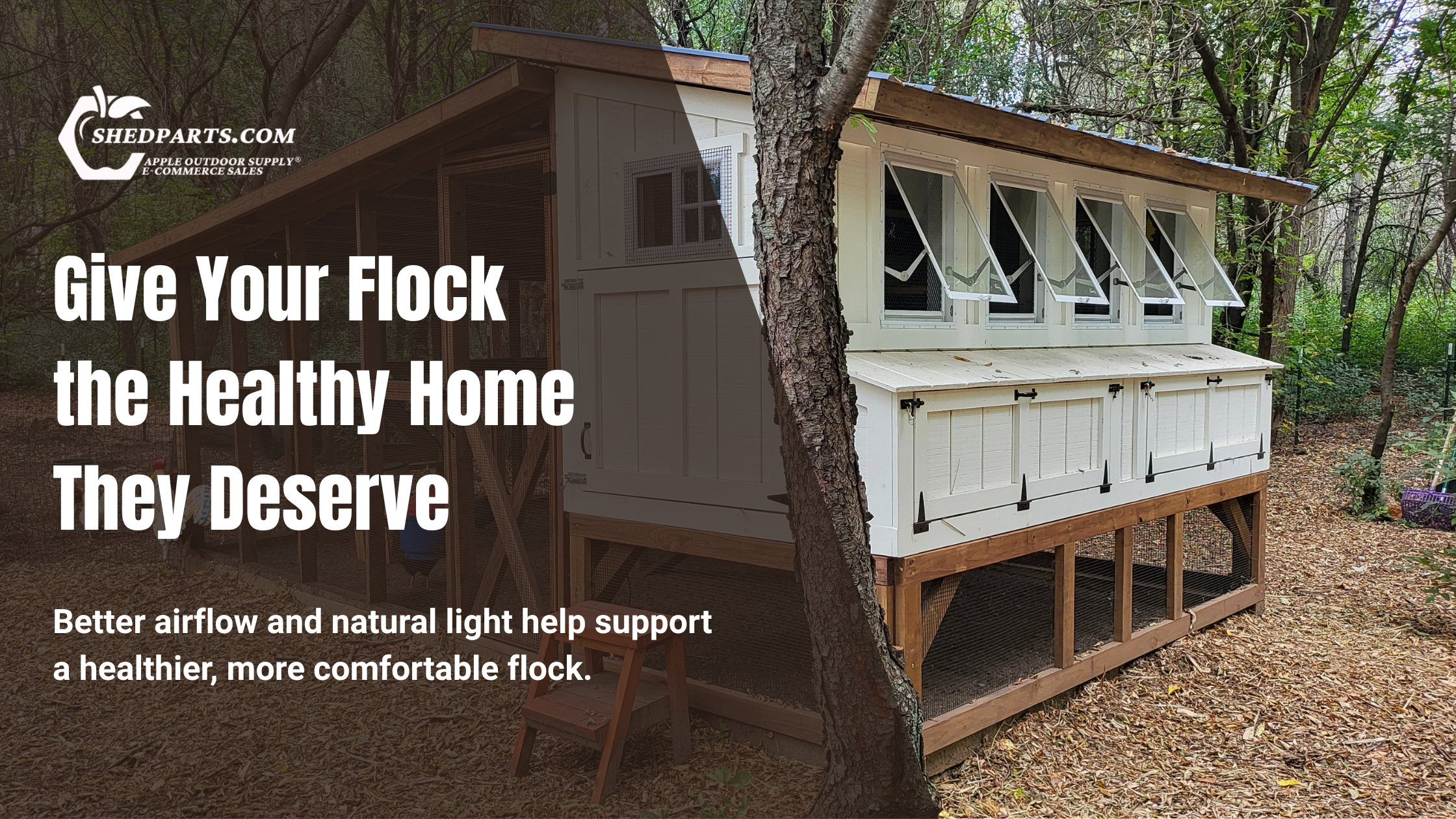
If you're building or upgrading a chicken coop this year, the windows you choose matter more than most builders expect. A well-placed coop window does three jobs at once: it keeps air moving, brings in natural light your flock needs, and — if you pick the right hardware — keeps predators out. Get any one of those wrong, and you're looking at heat stress, poor egg production, or a 2 a.m. predator break-in.
Here's how to think through all three, along with the hardware that makes it easy to get right.
Why Ventilation Comes First
A coop with weak airflow turns into a health hazard fast. Ammonia from droppings builds up, humidity rises, and in the peak of summer heat, poor ventilation can be just as dangerous to your flock as the cold is in winter. Chickens handle cold much better than they handle stagnant, hot, humid air.
The fix is cross-ventilation — air needs an entry and an exit point, not just one opening.
- Apple Outdoor Supply Chicken Coop Window — This flush-mount, tilt-out window is built specifically for coop use. It has a durable aluminum frame, tempered safety glass, and a wire mesh screen, so you can prop it open for airflow without letting flies, mosquitoes, or rodents in. The tilt-out design also means you control exactly how much air comes through — crack it for a mild day, open it fully during a heat wave.
- 8" x 8" Flush Mount Wall Vent — For coops that need passive, always-on airflow (especially useful up near the roofline where hot air collects), a flush-mount wall vent is an easy add. Pair one high vent with one low window, and you've created the basic stack-effect airflow that pulls hot, stale air up and out while pulling cooler air in low.
Rule of thumb: aim for at least one square foot of ventilation opening per 10 square feet of coop floor space, split between high and low points.
Why Light Matters More Than People Think
Natural light isn't just about being able to see your flock when you walk in — it directly affects egg production. Hens need roughly 14–16 hours of light exposure to lay consistently, and while many keepers supplement with a coop light on a timer, a well-placed window reduces how much artificial lighting you need and gives your birds a more natural day/night rhythm.
Light also affects behavior. Coops that feel like dark, enclosed boxes tend to have more pecking-order stress and feather-picking issues. A window or two breaks that up and gives hens a way to orient to the outside world.
The same Apple Outdoor Supply Chicken Coop Window works well here — the tempered glass lets in full daylight while the tilt-out screen means you're not sacrificing airflow to get it. Since coop windows are sized smaller than standard shed windows to stay in proportion with the structure, look for windows built specifically for coop use (rather than repurposing a full-size shed window) — you'll get a better fit and a more finished look.
Predator-Proofing: The Part Builders Underestimate
Ventilation and light don't mean much if a raccoon, weasel, or hawk can get through the same opening. Predators are relentless — they'll test every gap, latch, and hinge on a coop, usually at night when you're not there to notice.
A few things to lock down:
- Screens matter as much as glass. The wire mesh screen on the Apple Outdoor Supply coop window isn't just for bugs — it's a physical barrier that keeps small predators from reaching through an open window. Make sure any window you install has one.
- Secure the latch, not just the frame. The tilt-out coop window features a latch with a detent ball for extra hold, so it won't pop open on its own or get nudged loose by a determined animal pawing at it.
- Don't stop at the window — check the door. A predator-proof window paired with a weak door latch is still a vulnerable coop. A T-Handle or L-Handle Lock Kit gives you a keyed, secure closure for the main coop door, and master-keyed options are available if you're managing more than one structure.
- Hinges take more abuse than people expect. Predators will paw and pull at any moving part. Heavy-duty T-hinges hold up better over time than lightweight builder-grade hinges, and they're worth the upgrade on both doors and access panels.
Putting It Together
A well-built coop isn't one big decision — it's a handful of small ones that all reinforce each other. Ventilation keeps your flock healthy in the heat. Light keeps egg production steady and reduces stress. Predator-proof hardware protects the investment you've put into both. The good news is all three can be solved with the same short list of parts: a coop window built for the job, a passive vent up high, a secure latch or lock on the door, and hinges that can take a beating.
Whether you're framing a brand-new coop this month or retrofitting an older one before fall, start with the window — it's doing more work than any other single component.
Shop the essentials: