
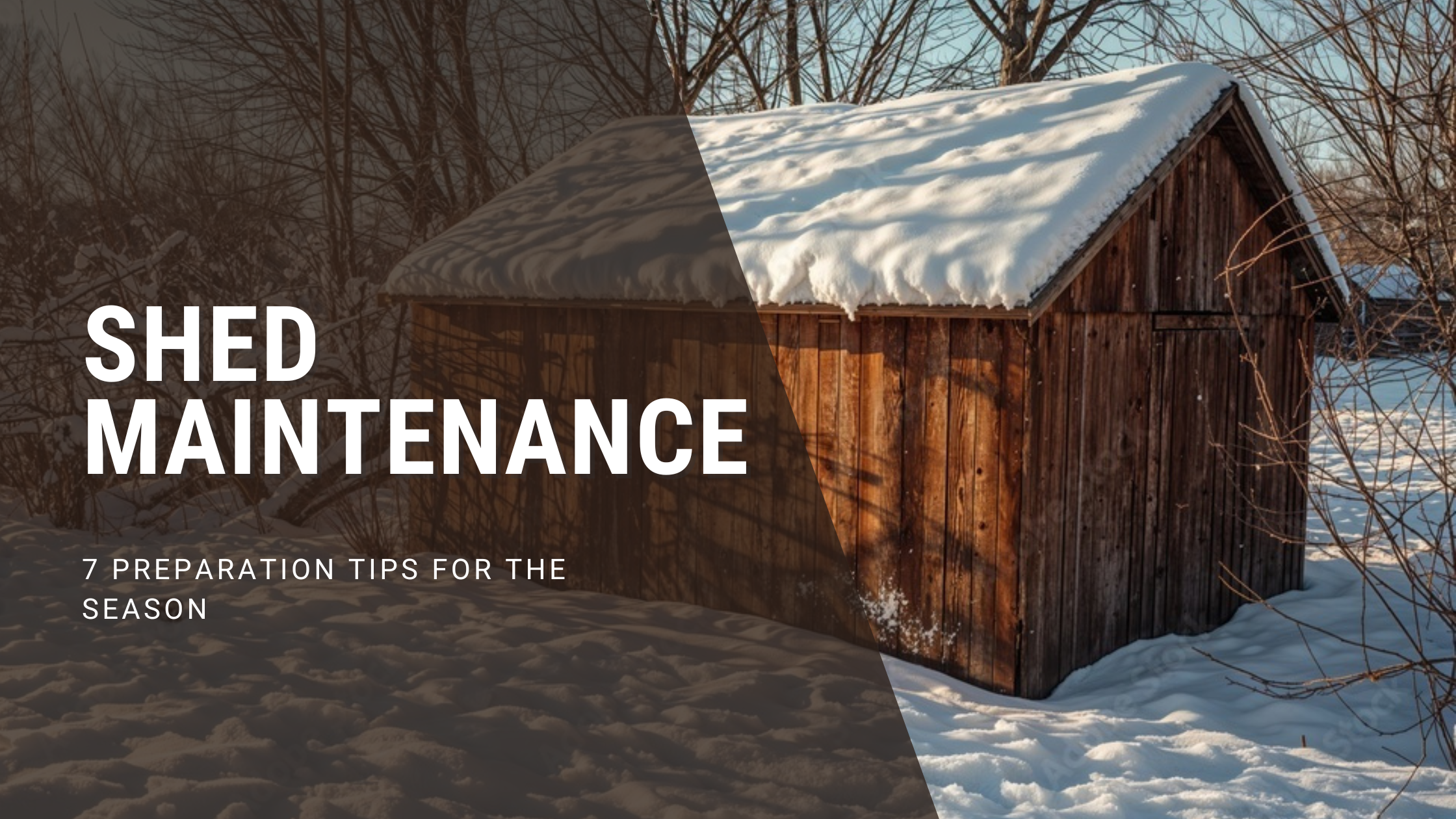
Cold weather doesn’t mean your shed has to sit neglected until spring. Whether you're a DIY homeowner or a seasoned shed builder, taking a few simple steps in winter can extend the life of your shed — and protect everything inside it.
Here are 7 must-do winter shed maintenance tips to help your structure stay strong through the season.
1. Check the Roof for Damage or Debris
Snow and ice can weigh heavily on your shed's roof. Start with a visual inspection for missing shingles, soft spots, or debris buildup.
Pro Tip: A lightweight roof rake helps remove snow without damaging shingles. If you find wear on roof flashing or hardware, replace them early to avoid water infiltration.
2. Inspect Doors and Hinges
Cold temperatures can cause metal components to contract and wooden doors to warp.
- Look for squeaky, rusting, or stiff hinges.
- Make sure your doors close flush — gaps can let in snow and critters.
Shop Now: Need replacements? We carry cold-weather-tough shed hinges, T-handles, and locking systems that won't freeze up when you need them most.
3. Seal Cracks and Gaps
Small cracks in the siding or around the foundation can lead to big problems — especially when ice gets in and expands.
- Use exterior-grade caulk to seal visible cracks.
- Consider foam weatherstripping around doors.
For builders: This is a great upsell opportunity — offer your clients a seasonal maintenance package with sealing included.
4. Protect the Interior
Humidity and cold can warp shelving, tools, and gear. Lay down a vapor barrier on the floor if you haven’t already.
Keep things off the floor with shelving kits or wall-mounted storage to avoid condensation damage.
5. Lubricate Moving Parts
Locks, latches, and door hardware need attention in cold temps. A simple spritz of lubricant can prevent freezing and rust.
Ask us about low-temp-rated shed hardware ideal for high-moisture environments — built to last even in northern winters.
6. Clean Out Gutters and Drains
If your shed has gutters, clogged leaves and debris can lead to ice dams and water backup. Clear them out now before the next freeze.
Redirect downspouts away from the base of your shed to avoid foundation damage.
7. Check for Rodents or Nesting
As the temperatures drop, rodents look for warmth — and your shed is the perfect hideaway.
- Look for signs like droppings, nests, or gnawed corners.
- Keep pet food or seeds in sealed containers.
- Close up even the smallest entry points.
For builders: Add value to your installs by offering rodent guards or floor upgrades for better protection.
Final Thought: A Little Maintenance Goes a Long Way
Whether you're protecting your tools, equipment, or valuable storage items, winter is not the time to ignore your shed. With a quick check and a few smart upgrades, your shed will be ready for whatever the season throws your way.
Need parts?
Explore our collection of cold-weather-rated shed hardware and accessories — designed to perform when it matters most.